How to Authenticate Herbal Products: Lessons from Zornia latifolia Market Adulteration
Why Does Species Substitution Happen in Commercial Zornia latifolia Products?
If you have read our introductory botanical profile of Zornia latifolia Sm. (syn. Z. diphylla (L.) Pers., family Fabaceae), you know this South and Central American legume has a documented ethnobotanical history—from traditional use by the Otomi people of Querétaro, Mexico, for soothing gastrointestinal smooth muscle spasms to calming herbal infusions in French Guiana and Brazil, where it is colloquially called "Maconha brava."
When regional ethnobotanical herbs enter global e-commerce supply chains, however, vernacular name confusion and economically motivated adulteration become major blind spots for buyers.
In the study by Cornara et al. (2018), researchers purchased three dried aerial-part products labeled as Zornia latifolia (harvested in Peru or Brazil) from international online retailers and compared them against authenticated field-collected voucher specimens deposited at the Herbarium BOTU (São Paulo State University, Brazil).
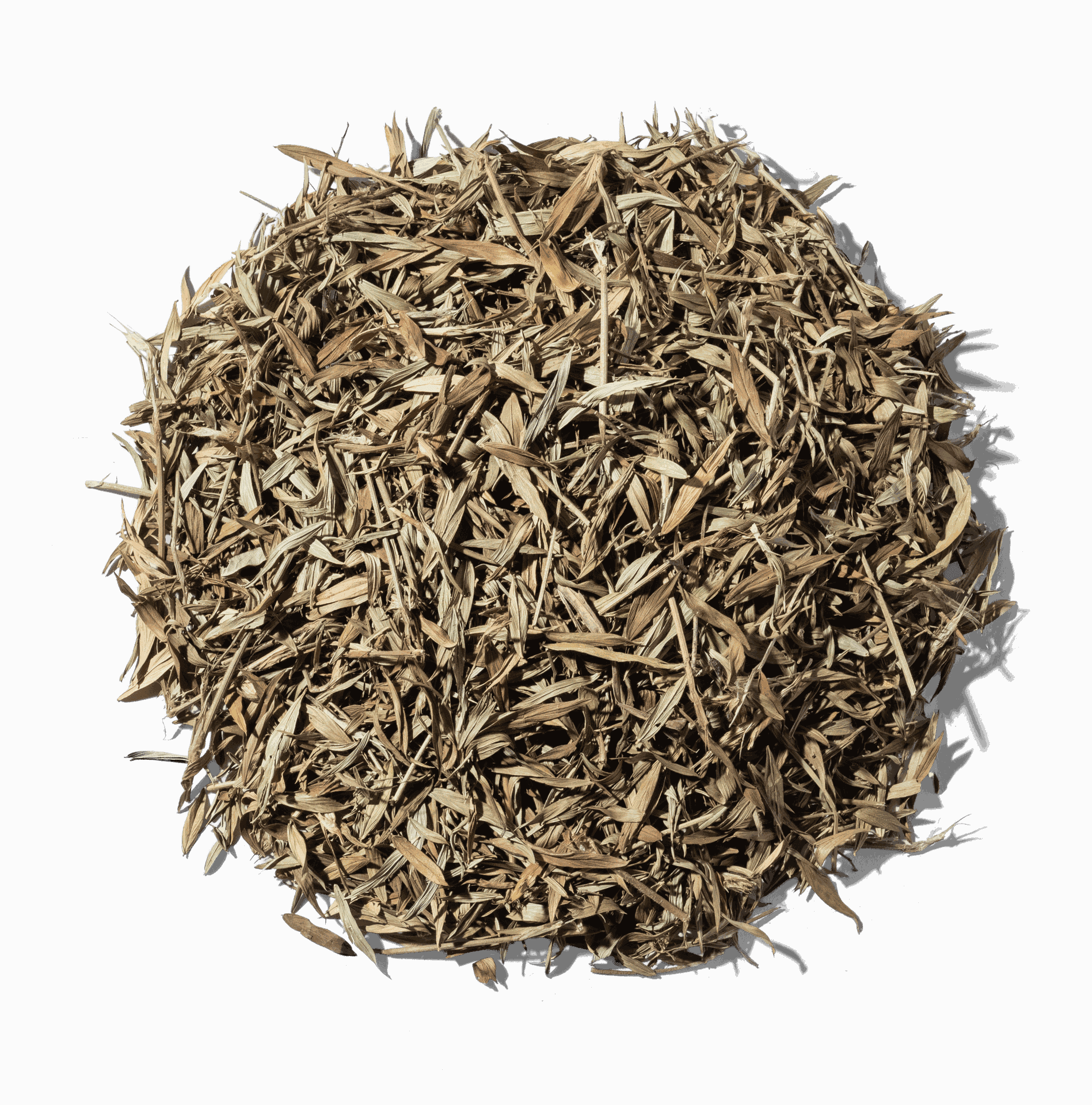
The result: none of the three commercial samples contained true Zornia latifolia. Instead, all three consisted of Stylosanthes guianensis (Aubl.) Sw., another South American Fabaceae species widely cultivated across the tropics as low-cost livestock fodder. Once dried and crushed into greenish-brown leaf and stem fragments, the two legumes look nearly identical to the naked eye—making substitution nearly impossible to detect without laboratory verification.
Zornia latifolia vs. Stylosanthes guianensis: The 4-Pillar Scientific Authentication Table
To establish definitive diagnostic criteria, the research team even germinated intact seeds found inside pods from the commercial packages at the University of Genoa Botanical Garden, combining anatomical microscopy, DNA barcoding, and liquid chromatography–mass spectrometry (HPLC-MS) across four verification dimensions:
| Authentication Dimension | Authentic Zornia latifolia Sm. | Adulterant Stylosanthes guianensis (Aubl.) Sw. | Practical Diagnostic Value |
|---|---|---|---|
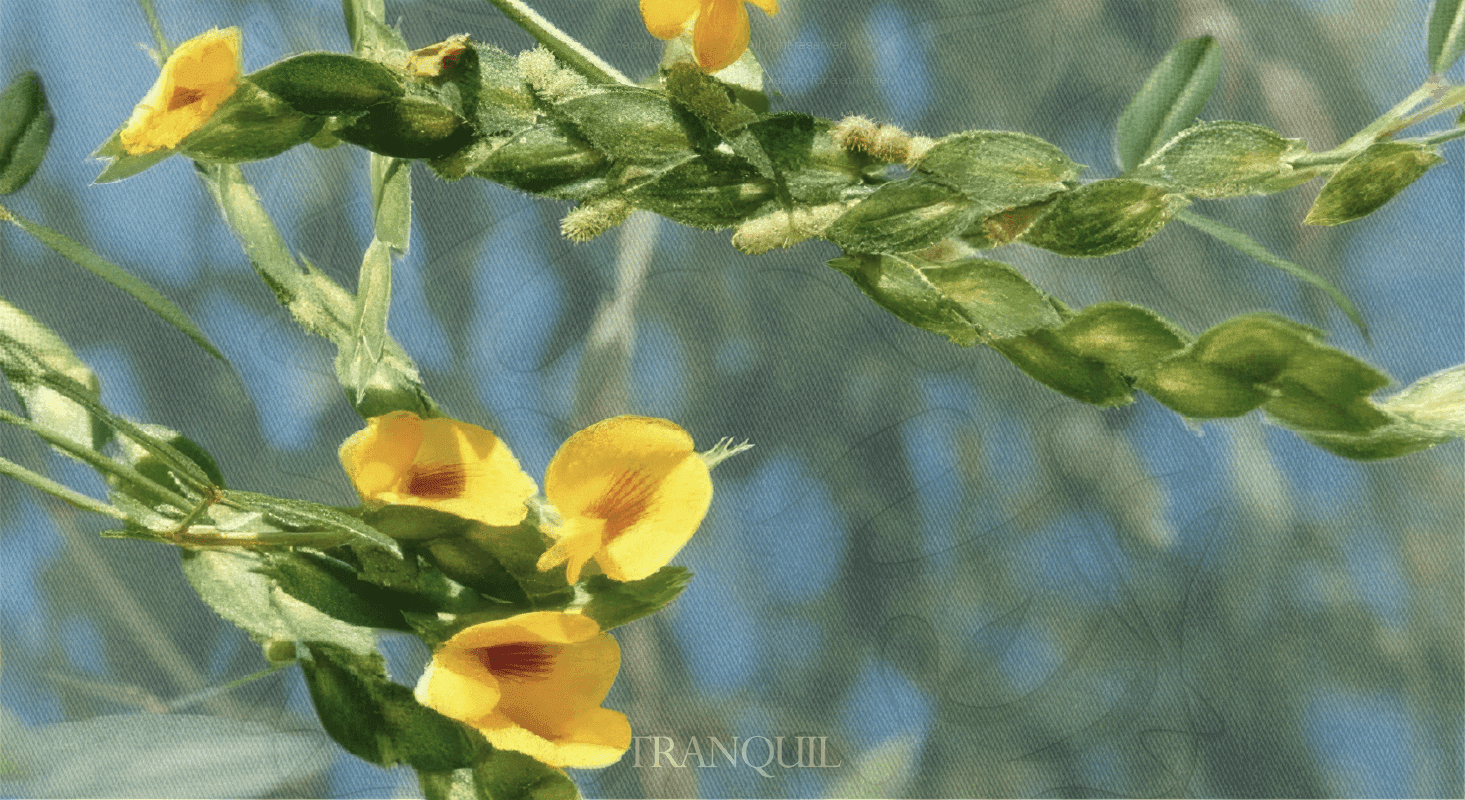
| 1. Macro-Morphology (Leaves & Fruits) | Bifoliate leaves (2 leaflets per leaf); fruit is a segmented loment (4–8 articles) densely covered with 2–3 mm retrorsely hairy bristles. | Trifoliate leaves (3 leaflets per leaf); fruit is a smooth, single-seeded pod with a tiny apical beak (rostrum). | When whole leaves or seed pods are present, checking "2 leaflets vs. 3 leaflets" and "bristled segmented loment vs. smooth single-seeded pod" provides an immediate visual screen. |
| 2. Micro-Morphology (SEM & Cross-Sections) | Anisocytic stomata; sparse uniseriate trichomes restricted to veins and margins; complete absence of calcium oxalate crystal idioblasts; mucilage secretory cavities in the mesophyll. | Paracytic stomata; both epidermal surfaces are packed with collapsed calcium oxalate crystalliferous idioblasts forming a dense polygonal network. | For crushed tea-cut material, low-magnification light microscopy or SEM-EDS detection of the epidermal calcium oxalate crystal network rapidly flags S. guianensis. |
| 3. DNA Barcoding (Molecular ID) | Nuclear ITS sequence matches GenBank reference Zornia latifolia at 100% identity (Accession LT970851). | Plastid matK and nuclear ITS sequences match Stylosanthes guianensis at 100% identity (Accessions LT970852, LT970853). | Accurately identifies even finely powdered material, provided the target species has reference sequences deposited for the chosen genetic locus. |
| 4. Phytochemical Fingerprint (HPLC-MS / NMR) | Rich in flavonoid di-glycosides: prominent peaks of luteolin rutinoside ( 593) and apigenin/genistein diglycosides ( 577), plus the rare flavone syzalterin ( 297). | Weak flavonoid profile: minor amounts of quercetin glyco-rhamnosides ( 609), quercetin-3-methyl ether, and free caffeic acid. | Confirms both species identity and batch quality; substituting the plant completely alters the secondary metabolite profile in an infusion. |
Why Botanical Identity Matters for Phytochemistry: Insights from the 2020 Neuronal Synergy Study
Does swapping one legume for another really change the chemistry? Dramatically so.
In a follow-up study published in Drug and Chemical Toxicology (Alloisio et al., 2020; Taylor & Francis full text), the same research group fractionated a 90% 2-propanol extract of authenticated Brazilian Zornia latifolia and tested its effects on spontaneous electrical activity in cultured rat cortical neuron networks using microelectrode arrays (MEAs):
- No THC or Alkaloids; Activity Resides in Lipophilic Flavonoid Aglycones: Chemical analysis confirmed the complete absence of -THC, THCA, and alkaloids. Concentration-dependent inhibition of neuronal mean firing rate (MFR) and mean bursting rate (MBR) was driven by the lipophilic aglycone fraction ZL1 ( for MBR).
- Synergy Between the Rare Flavone Syzalterin and Genistein: NMR and HPLC-MS analysis of fraction ZL1 revealed ~42% genistein, ~53% apigenin, and ~5% syzalterin (6,8-dimethylapigenin). Tested alone, syzalterin () was more than twice as potent as genistein (). When syzalterin and genistein were combined in their natural 1:9 ratio, potency increased markedly (), demonstrating a classic phytocomplex synergy.
By contrast, the fodder adulterant Stylosanthes guianensis contains only low levels of quercetin glycosides and caffeic acid, lacking both the abundant luteolin/apigenin/genistein rutinosides and the syzalterin–genistein phytocomplex. Without verified botanical identity, any discussion of constituent mechanisms is meaningless.
Naked Eye, Scientific Name, Sourcing Records, and Lab Testing: Strengths and Limits of Each Tool
- Inspecting Macro-Morphology (Naked Eye & Hand Lens): Effective as a first-line screen when whole leaves, stems, or seed pods are intact (e.g., verifying bifoliate leaflets and bristled loment articles), but largely ineffective once herbs are milled or crushed into tea-bag cuts.
- Verifying the Latin Binomial (Taxonomic Labeling): Requiring the exact scientific name (Zornia latifolia Sm.) rather than ambiguous trade names filters out casual naming errors, yet a printed label alone cannot prevent supply-chain substitution.
- Performing Microscopy & DNA Barcoding (Tissue & Genetic ID): Epidermal microscopy rapidly spots diagnostic features like calcium oxalate crystal networks in crushed leaves, while DNA barcoding (
ITS) identifies even fine powders—though barcoding must be paired with other methods when public databases (GenBank) lack complete reference sequences for rare markers likerbcLormatKin certain Zornia species. - Profiling Phytochemical Fingerprints (HPLC-MS / NMR): Validates both taxonomic identity (via marker peaks at 593 and 577) and post-harvest preservation quality.
Evidence Boundaries and Practical Sourcing Guidelines
- Avoid Extrapolating Sample Findings to the Entire Market: Cornara et al. (2018) analyzed three specific commercial web samples; while the study proves that Stylosanthes guianensis adulteration occurs and establishes rigorous detection methods, it does not mean every Zornia latifolia product worldwide is counterfeit.
- Distinguish In Vitro Neuronal Assays from Human Clinical Outcomes: Alloisio et al. (2020) evaluated purified isopropanol fractions on embryonic rat cortical neurons in vitro; these mechanistic findings cannot be directly translated into human dietary infusion effects or medical claims.
- Require Batch-Specific Traceability: Published literature provides the analytical blueprint for authentication, whereas the quality of any commercial botanical product depends on its own verifiable harvest origin, voucher retention, and batch testing.
Frequently Asked Questions (FAQ)
Q1: Does Zornia latifolia contain THC or cannabinoids?
No. Both the 2018 and 2020 HPLC-MS and NMR investigations of authenticated Brazilian Zornia latifolia confirmed the complete absence of -THC, THCA, and alkaloids. Its primary constituents are flavonoid di-glycosides and aglycones (luteolin, apigenin, genistein) along with the minor methylated flavone syzalterin.
Q2: How can I visually distinguish whole Zornia latifolia from Stylosanthes guianensis?
In intact dried material, look for two morphological markers: leaflets (Zornia latifolia has paired bifoliate leaflets, whereas Stylosanthes guianensis has three-part trifoliate leaves) and fruits (Z. latifolia produces a multi-segmented loment covered in tiny hooked bristles, whereas S. guianensis produces a smooth, single-seeded pod).
Q3: Why is microscopy so effective when the herb is already crushed?
Even in tiny leaf fragments, Stylosanthes guianensis exhibits a dense epidermal network of calcium oxalate crystals under light or scanning electron microscopy (SEM), whereas true Zornia latifolia epidermis contains zero calcium oxalate crystals.
Q4: Why should DNA barcoding be combined with chemical analysis in herbal authentication?
DNA barcoding can identify species from trace fragments, but public databases like GenBank may have incomplete reference sequences for certain genetic loci in rare plants (for example, Z. latifolia required nuclear ITS rather than plastid rbcL alone), and DNA cannot measure whether active flavonoids have degraded during drying or storage.
References & Primary Sources
- Cornara, L., Fortuna-Perez, A. P., Bruni, I., Salis, A., Damonte, G., Borghesi, B., & Clericuzio, M. (2018). Zornia latifolia: a smart drug being adulterated by Stylosanthes guianensis. International Journal of Legal Medicine, 132(5), 1321–1331. DOI:
10.1007/s00414-018-1774-z(PubMed ) - Alloisio, S., Clericuzio, M., Nobile, M., Salis, A., Damonte, G., Canali, C., Fortuna-Perez, A. P., Cornara, L., & Burlando, B. (2020). Cannabis-like activity of Zornia latifolia Sm. detected in vitro on rat cortical neurons: major role of the flavone syzalterin. Drug and Chemical Toxicology, 45(3), 1169–1180. DOI:
10.1080/01480545.2020.1788057(PubMed | Taylor & Francis )